This is a tale of smaller, slower living, told by tiny-home owner Katie in suburban Brisbane. You will find a video of the interview at the end of this post.
I’ve written before about the way that models shape our views of what is possible, what is desirable and what is normal. Part of our project is to find the role models that inspire us and share these examples. Our hope is that we can shift the perceived range of normal to encompass habits and lifestyles that truly benefit both people and our planet. Katie’s is one such story.
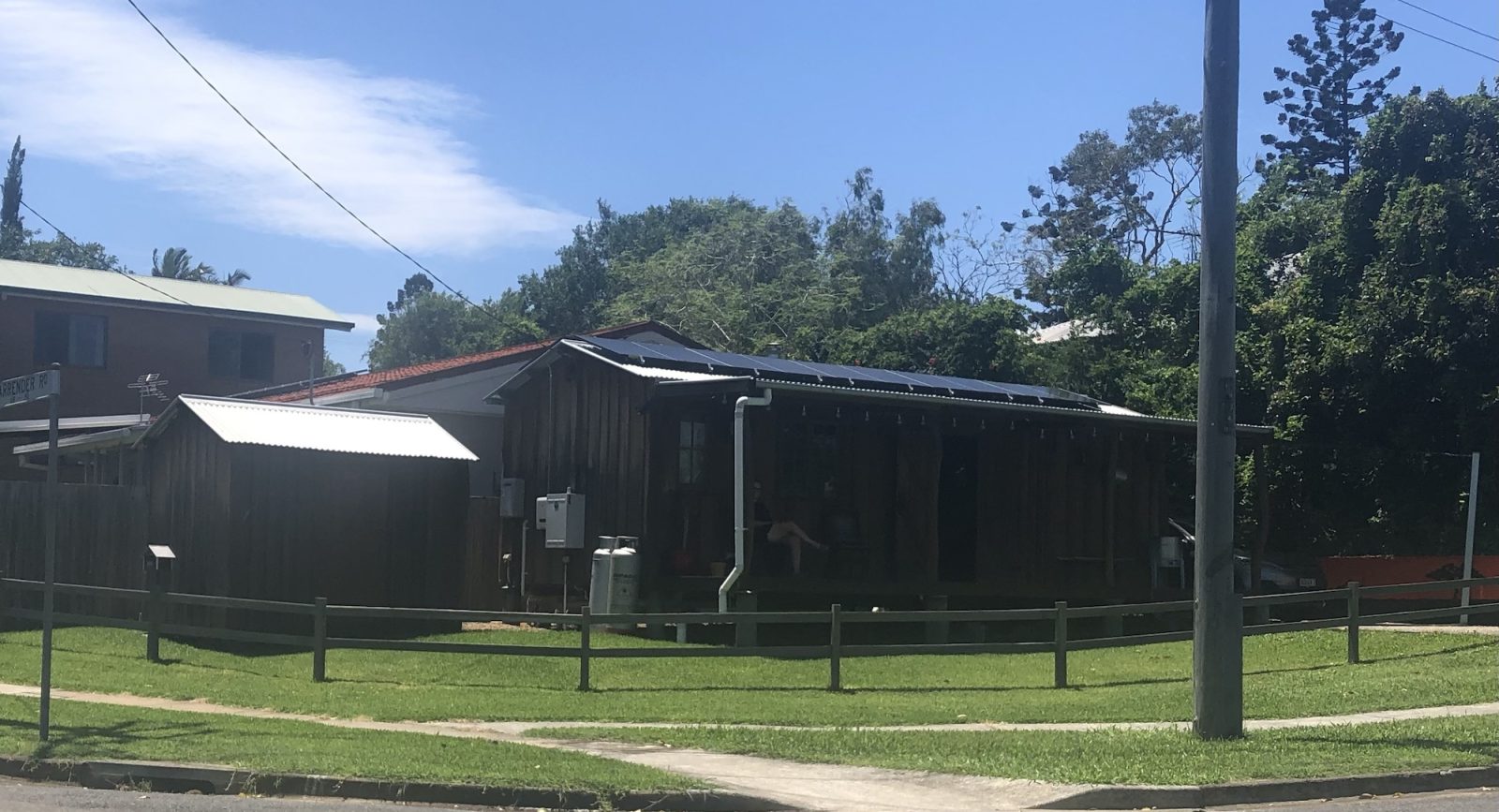
I’ve ridden past this gorgeous timber cottage for many years. When I first saw the yard split off the former suburban block on my ride to the kids’ school, I was incredulous anyone could do something with the tiny wedge. For a while it was just weeds, and then in the space of a couple of weeks appeared the magnificent, liveable home. It took a further eight years for me to find the time and courage to speak with the owner.
What we discussed
We spoke about the underlying motivations and choices to live smaller. Not as a retreat, but as a deliberate move toward something clearer and more grounded. We covered a little about her home and the process of designing and building it and about her inspiration and challenges. We also explored how the choice to live smaller plays out in other ways in Katie’s life and her vision of a flourishing future.
This post is something of reflection drawn from the conversation. We have met so many people with remarkable stories to share since we have gone looking. I am remiss in not sharing more before now. Each of them, in their own way, has helped shape our journey toward living more with less. Fortunately, many of these amazing people have become friends so the opportunity has not slipped away altogether.
The pull toward a lighter life
Katie described a moment of recognition. It was not dramatic. Nor was it a crisis. It was a dawning that the life she had been living did not fit the values she was growing into.
Most of that shift happened many years ago, in Zambia. She spent time in a community where resources were limited, but relationships were rich and it made an impression. This lived experience of relative scarcity is a common thread among people we have met, that turned their worldviews upside down. It was our experience too.
After returning to Australia, the contrast Katie felt was impossible to ignore. The default patterns of life no longer made sense. The standard habits of comparison, consumption and clutter were a wild contrast with the simplicity and slow living of Zambia.
The desire to live lighter did not and does not feel like deprivation. It was freeing. It was about removing noise. It was about seeing what remained when the unnecessary was stripped away. And about leaving more for others.
Building a home that reflects intention
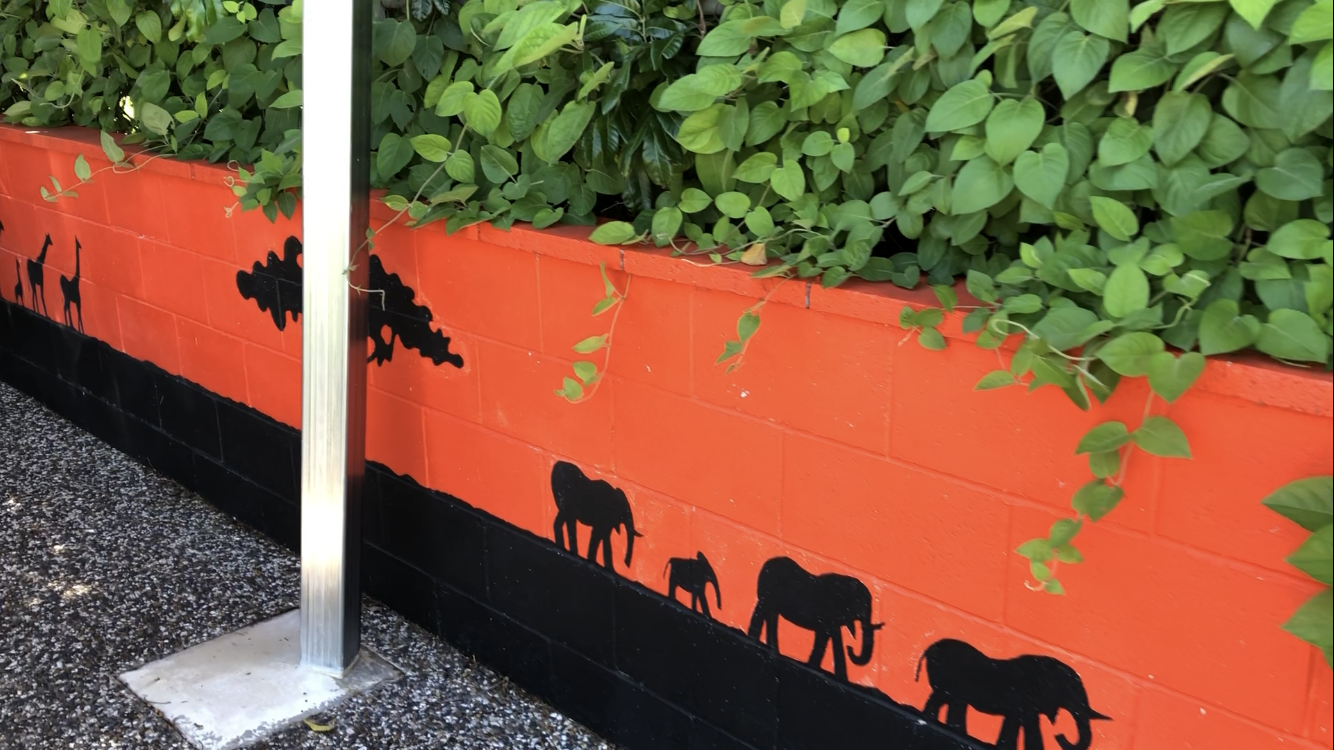
The tiny-home project grew from that awakening. Living in similar, natural spaces on while travelling between work and volunteering projects in Africa inspired the style. The structure that resulted became a place to test a belief: that smaller spaces can hold more meaning if they are shaped with care.
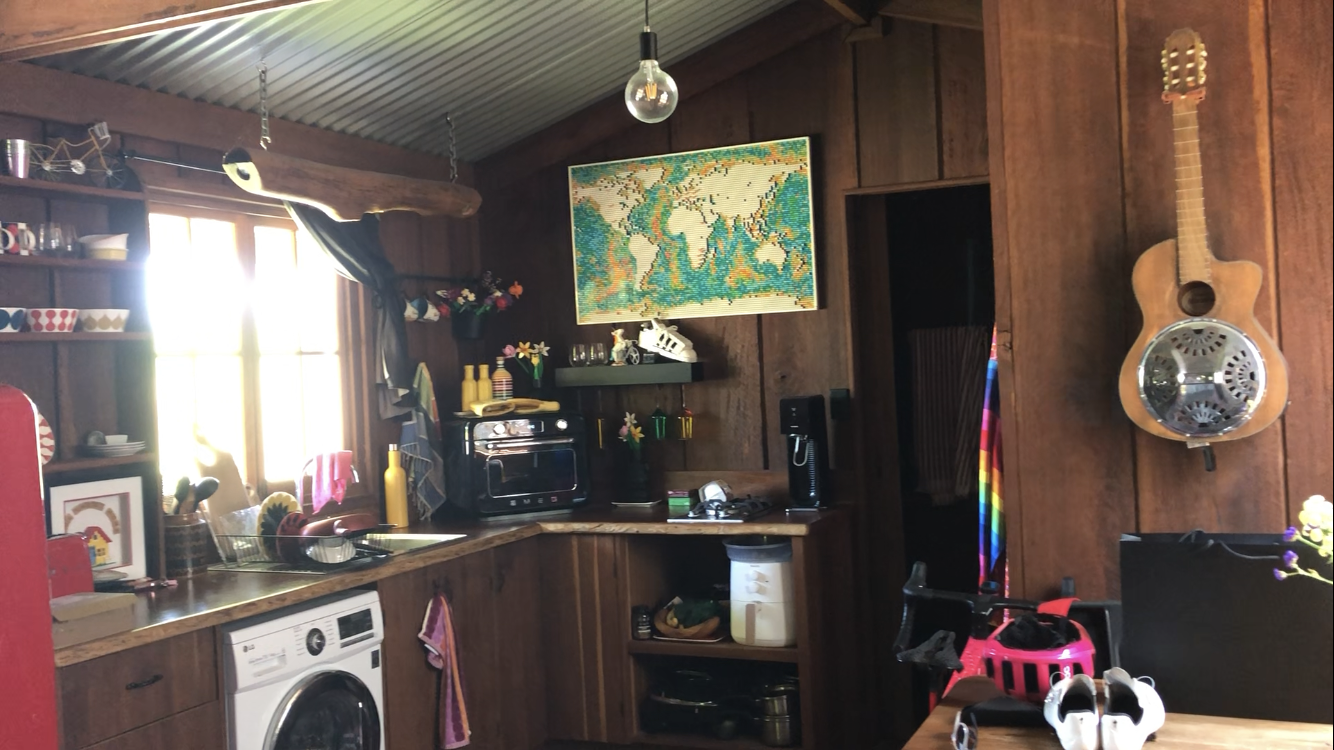
The planning took time and Katie emphasises it should. Though not too much! A construction company just two kilometres from her tiny block providentially built the exact raw-edge style she dreamed of. Sadly, the owner passed away several years ago and the business no longer seems to be trading. Working with them and inspired by others before her, she imagined how each corner of the space might work, and learning what mattered most. Light mattered. Airflow mattered. Storage mattered, but only just enough. She emphasises a deliberate approach to considering everything she expected to own. Everything she expected to do and where she might do it. Powerpoints were added in unusual places. A bike hook was carefully considered to ensure it wouldn’t interfere with the flow. The goal was not to cram everything in. It was to keep only the things that supported her chosen way of living.
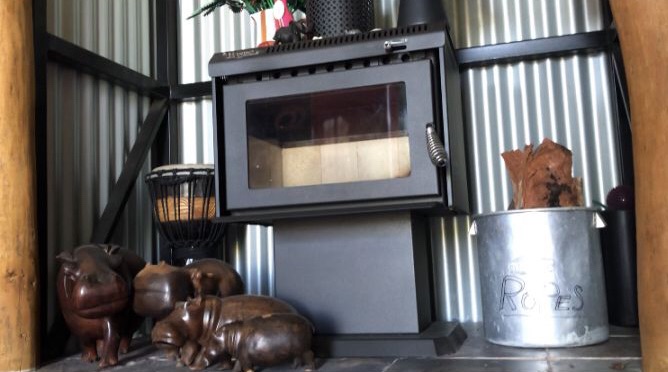
The finished house feels calm and welcoming. Not empty. Not stark. Calm. Every piece has earned its place. Every object has a story or a purpose. After eight years, and with the timber finish exposed, the space feels busy, but at the same time quiet. There is just one room, besides the bathroom. No hidden messes or caches to be tidied later. It is mental spaciousness she has created. The home is the realisation of the dream that took hold in Zambia. Peace grows easily when life is not overcrowded.
What a small home offers
Australian’s build the biggest homes in the world at over 230m2. Building or buying a smaller home comes with many advantages, as I have discussed previously. For Katie the building cost less than one third of a typical new build, giving her the opportunity to enter the housing market as a single person, just minutes from a train station. The banks presented a challenge, not recognising the value of the construction work. Fortunately, she had support from her family that helped her overcome this. The maintenance has been minimal. Energy costs are minute, even with aircon on the hottest days. Cleaning takes just minutes. Her debts are low and shrinking. That alone reduced a psychological weight borne by many homeowners for decades.
Even more interesting is the liberty afforded by perspective. A tiny home removes the illusion that life is a series of separate compartments. You cannot hide mess, or buy something on impulse and hope it will “fit somewhere”. You begin noticing your habits with a kind of clarity that larger spaces often obscure.
There was a quiet humility in the way she described her experience. No preaching. No declaration that others should follow. It was simply an honest account of finding contentment by removing clutter, both physical and mental.
The ripple effect of choosing less
Simplicity creates space for reflection and connection. The prominent location, the bold natural timber aesthetic and the low open fence have served as an invitation. Hundreds of people have stopped in to complement Katie on her home. They have congratulated her and shared their amazement at things that barely get her notice. She has undoubtedly inspired others to consider what matters to them, and to pursue their own dreams of simple living. I can imagine a setting where multiple homes in a neighbourhood offered similar porosity of their boundaries and warmth at their threshold.
This is the intention behind intentional communities. Unfortunately they are often remote or exclusive, but not all is lost. Even in existing communities we can take down some barriers, both physical and emotional and choose to engage with our neighbours and our streets. Emelie and I shared our overwhelmingly positive experience of this earlier in the year.
Katie spoke about the evolution of thoughts and habits that followed her time in Africa and growing sense of unease at social and environmental inequity. She and her bandmates of Remember Seven produced amazing music exploring the issues. They committed to buying no new clothing. Katie did more of her cooking, became vegetarian, and cut her energy use. Her love of the outdoors flourished as the outside became an extension of her living space. Relative financial freedom and a slower pace made more room for her passion for bicycle touring, furthering her connection with nature.
The transformative experience she described felt remarkably familiar. Our own journey with Living More with Less is founded on the belief that meaning comes from caring for others and our shared home Earth, rather than possessions and prestige. Hearing someone else describe that same transformation reaffirmed why this project matters.
Relearning enough
The most striking part of the conversation was the honesty and modesty about enough. Money. Space. Security. Stuff. Before she moved in, everything Katie owned fit in her car. She described her 27m2 tiny-home as feeling palatial. Imagine how I felt hearing that with our immense 90m2 home! With all that space, it took deliberate efforts on her part to resist a return to consumptive patterns. She concedes she slipped and would like to rewind. One bicycle became three. A nightmare in her one room. A similarly styled tiny shed was added to store camping and garden equipment. A past relationship with a maximalist tested her resolve and gave rise to considerations of lifting her house to build underneath.
These things are not simple in practice. Many people fear that living with less means not having enough. I have described my own experience with this. But there is such a vast chasm between our wants and our needs. Between our perception of enough and what is good for us. For our new friend, this has borne out strongly in favour of her choices. The smaller life feels fuller, because it is not diluted by excess. Needs became clearer. Wants became easier to question. Gratitude became easier to feel. Her vision for the future, informed by her experience in public health communication, is one where everyone has taken a few steps to the left. Towards empathy, compassion and humility. I share her vision as an effective path to a better world.
Katie’s tiny-home living is not minimalism as an aesthetic, though it grew from one. It is minimalism as a philosophy. A way of paying attention. A way of choosing deliberately instead of automatically.
Why these stories matter
As we make our own journey of exploration, encounters like this have become important anchor points. They remind us that living with intention is not abstract. It is not an ideology that floats above real life, but a practice. Something people are already doing, quietly and lovingly, in tiny houses, in shared homes, in caravans, and in ordinary suburban streets.
Many of the most inspiring people we have met did not set out to be role models. They were simply trying to live in a way that felt honest to their own intentions. Yet their choices ripple outward. They challenge assumptions without raising their voices. They show, through their daily lives, that other ways of living are possible.
These are the stories we want to keep sharing. Not as prescriptions. Not as instructions. But as invitations. As inspiration. Thank you Katie. Thank you to everyone else. More to come soon.