In this post we discuss some of the choices we’ve made throughout our adult lives that have saved us the equivalent of 21 years of work, bringing us financial freedom and the time and flexibility to live fun and fulfilling lives, as well as and donate well over $100,000 to effective charities, saving dozens of lives and transforming hundreds more.
We have broken our savings into six categories, capturing the most significant contrasts with Australian median spending or typical quoted prices:
- Housing
- Transport
- Household goods
- Food
- Recreation
- Energy
All dollar values are adjusted to 2026 equivalent using a normalised inflation of 2.7% across the timespan. Spending quoted as “median” is the average spending of the middle quintile in the Australian Beaureau of Statistics 2015/16 Household Expenditure survey of 10,000 households. Savings figures include a return of 1.8% above inflation on avoided spending to represent savings we made on loan interest and returns we made on savings accounts and other investments.
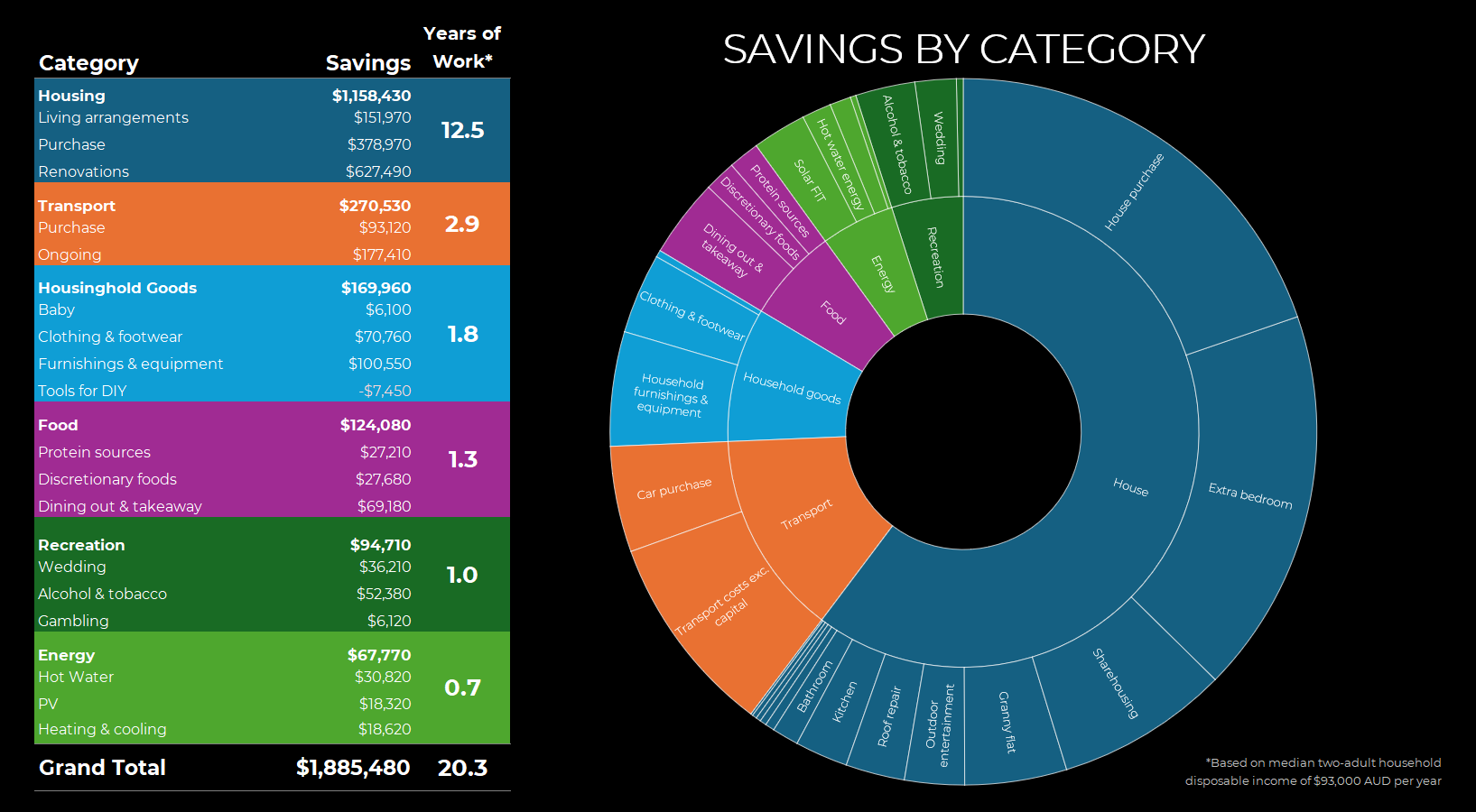
Here are the main figures. Savings have been related to the number of years of work we have theoretically avoided based on the Australian median household disposable income for a family of four ($93,000).
Housing
- We bought our home for $274,000 when the median price was $450,000, immediately saving $176,000 and paying off the mortgage in 10 years.
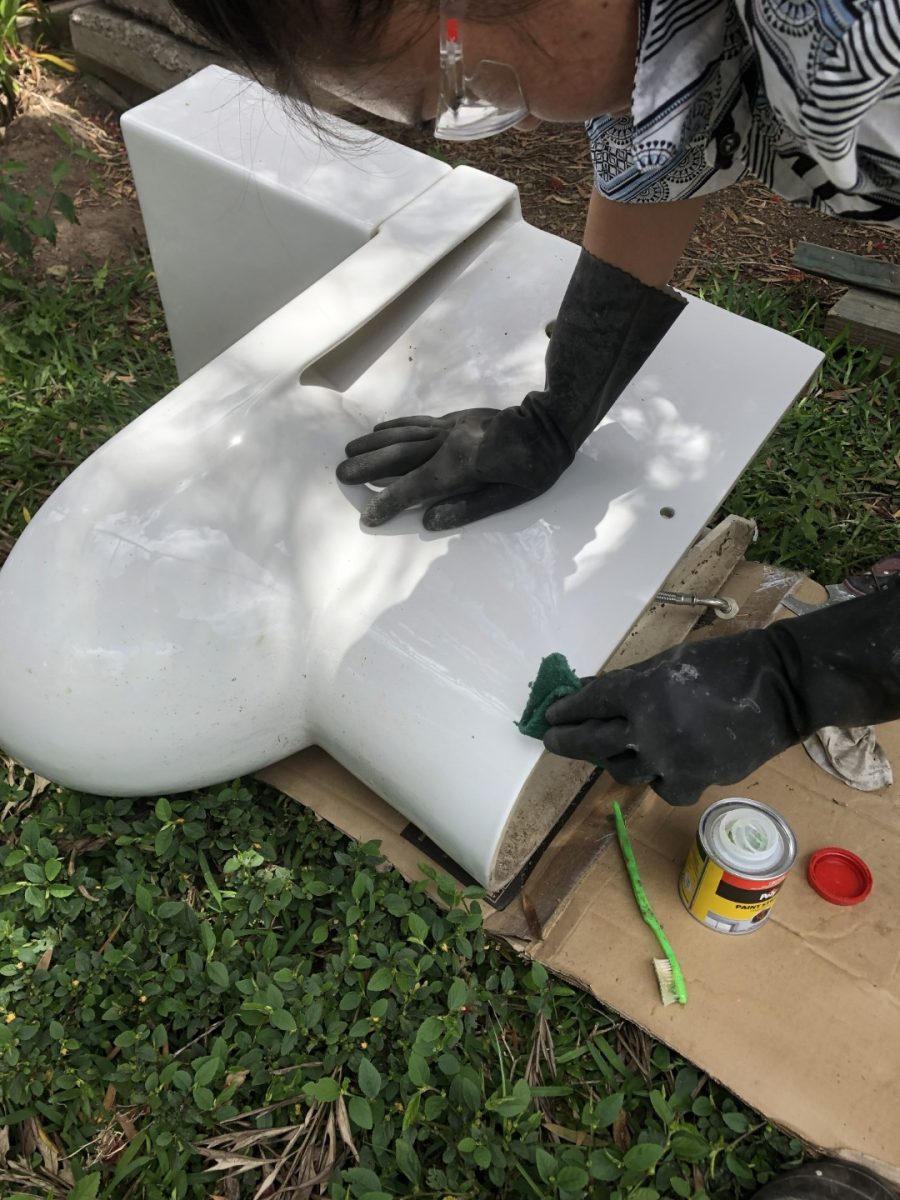
- DIY renovations included a second-hand kitchen, salvaged flood-damaged bamboo flooring, and second-hand mirrors and fixtures for the bathroom, saving ~$70,000.
- We built a granny flat from a rescued shed, saving ~$90,000, and rented out rooms, adding ~$150,000 in share housing savings.
- Choosing to give up some living space for an extra bed-room rather than undertaking an extensive renovation saved us ~$340,000
- Our choices prioritized practicality, repurposing, and avoiding luxury, proving modest living can fund financial freedom and impact.
Transport
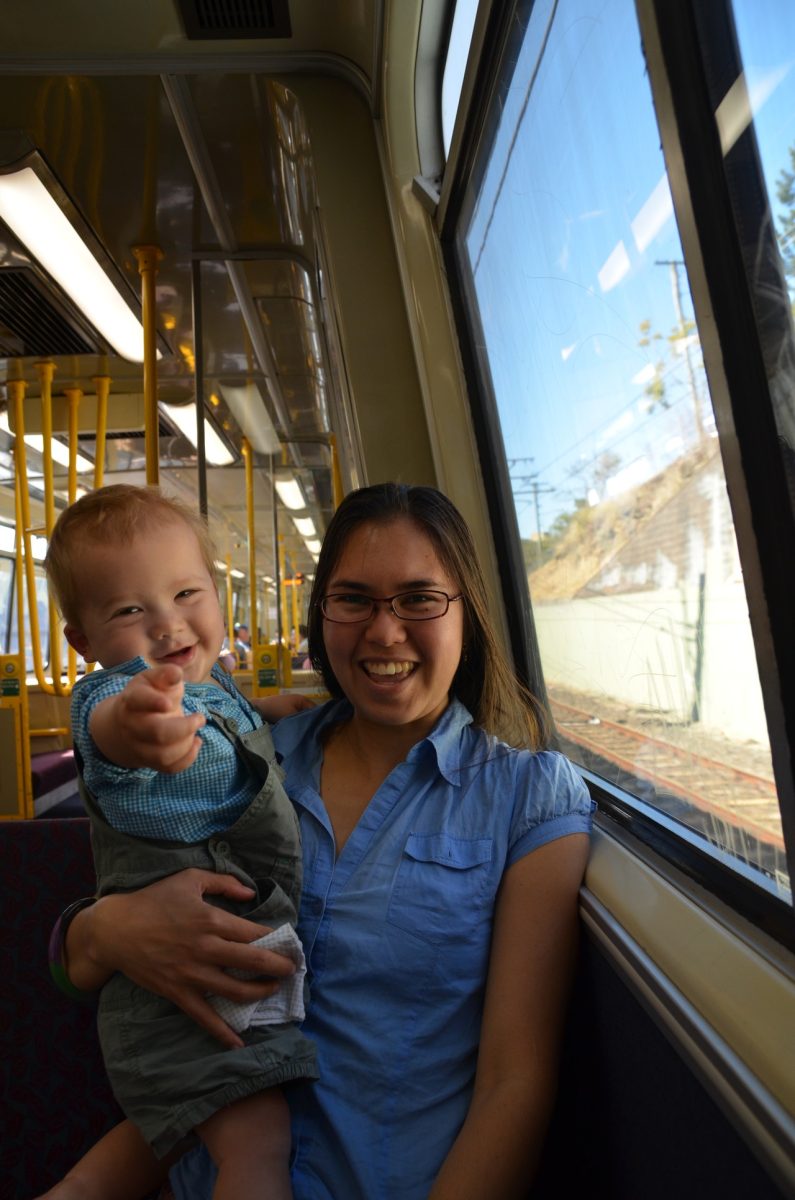
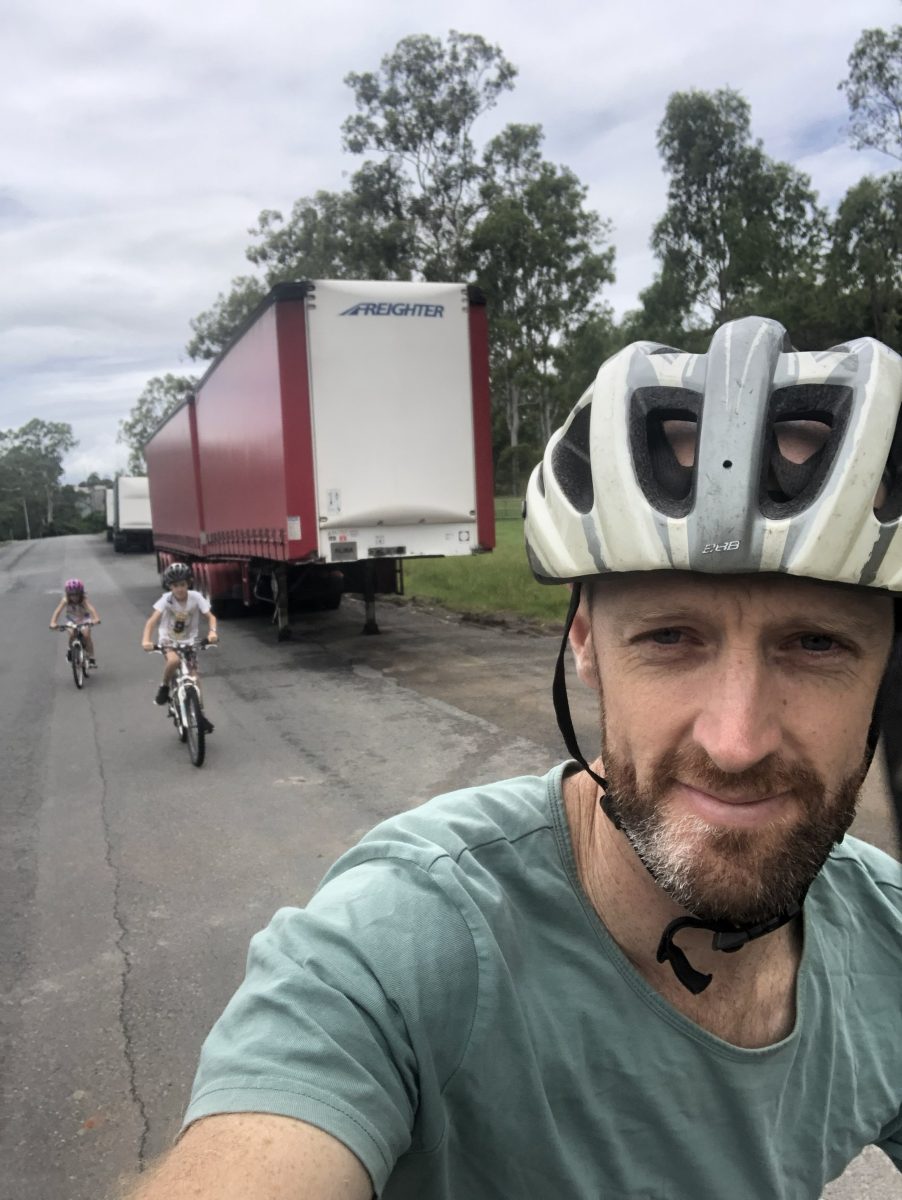
- For the first 5-6 years of this time period, we lived without a car, relying on trains and cycling.
- We later bought a second-hand small car and repaired it for 20 years instead of replacing it. This compares to the average replacement interval for new cars of 10 years
- Minimal driving, especially in recent years, and no roadside assistance further reduced costs.
- Saved ~$270,000 ($180,000 in running costs, $93,000 on purchases), equivalent to 2.9 years of median income.
- We challenged the assumption that families need larger vehicles, often fitting five people in our small car when necessary.
- Our confidence in improvising and using public transport showed car ownership isn’t essential for a fulfilling life.
Energy
- We avoided resistive heating and delayed air conditioning installation, opting for a second-hand down doona, fans and natural ventilation.
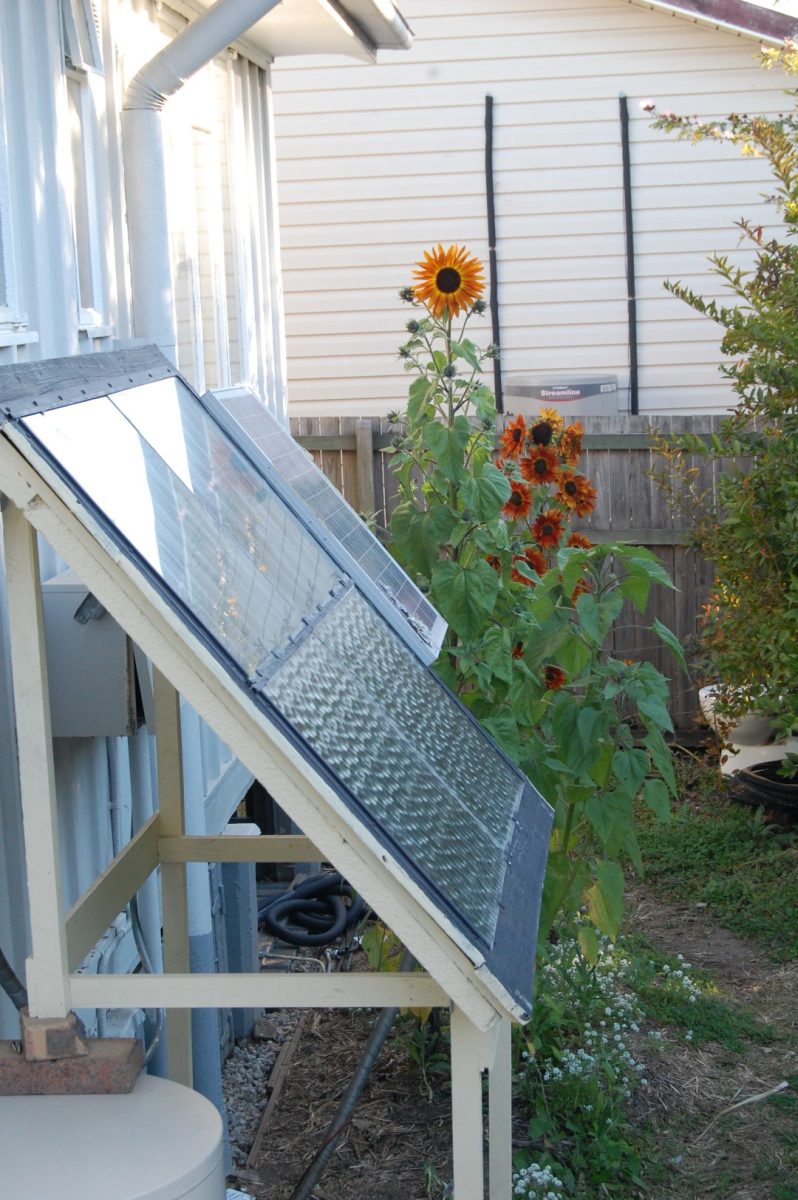
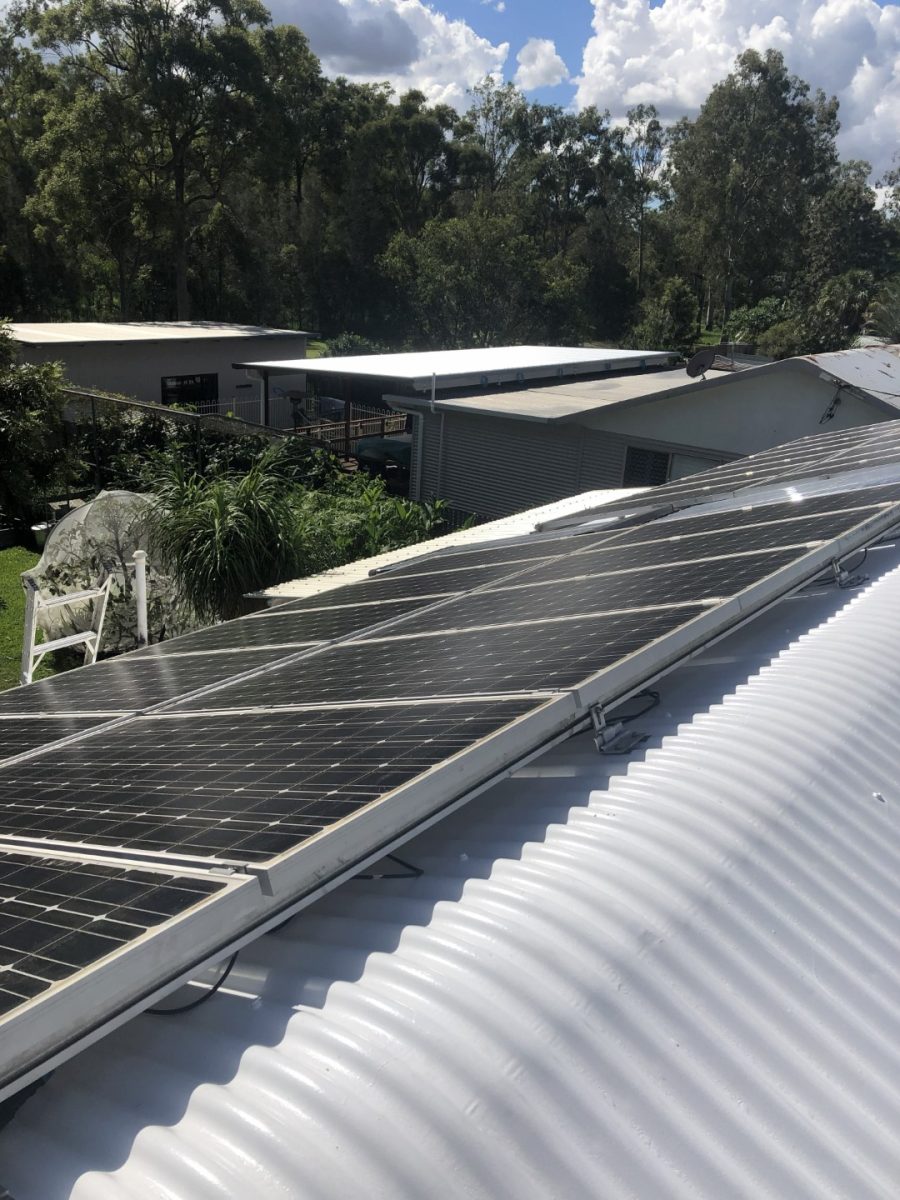
- Solar panels and energy-efficient water heating reduced costs significantly.
- Saved ~$67,000, equivalent to 0.7 years of median household income.
- Small choices like natural ventilation and layering clothing instead of heating added up to substantial savings.
- Our approach proved that comfort doesn’t require excessive energy consumption.
- Energy efficiency can be achieved without sacrificing comfort or quality of life.
Food
- We adopted a plant-based diet, which aligned with our values and proved cost-effective.
- Our kitchen featured second-hand appliances, including a rusty rice cooker, demonstrating frugality over perfection.
- Mindful eating habits, avoiding food waste, and using whole foods contributed to savings.
- Plant-based meals often cost less than meat-based ones, especially with bulk purchasing.
- Our food choices supported health, financial goals, and environmental sustainability.
- This category showed how daily habits contribute to long-term financial success and well-being.
- Savings do not yet account for our most recent dramatic change in this area, dumpster diving.
Recreation
- We completely avoided tobacco products.
- In our younger years, we home-brewed beer, cider, and ginger beer, keeping costs minimal.
- Our wedding was low key, hosted at a family venue and lubricated with home-brew.
- We preferred hosting gatherings at home rather than going out, saving money while maintaining our social life.
- Over time, our alcohol consumption decreased, and we found we preferred socializing without it.
- Saved substantially while enhancing personal well-being and relationships.
Household Goods
- We embraced second-hand items throughout our home, from furniture to kitchen appliances.
- Our philosophy was to prioritize function over appearance, saving significantly on household items.
- We repurposed materials whenever possible, giving new life to items others might discard.
- Second-hand items often had more character and history than new purchases, adding charm to our home.
- Our choices reflected broader values of sustainability, frugality, and mindful consumption.
- By avoiding the constant cycle of buying new, we reduced waste, saved money, and created a home that truly reflected our values.
Recognising Our Privilege
Not every choice we made is available to people today and this is not intended as financial advise. We were both privileged to be born in Australia to stable working class families. We received adequate support and opportunities through-out our childhood and young-adult lives to complete tertiary education and enter the workforce at above average incomes. The social support and infrastructure available to us is among the best in the world, playing an important role in our financial success. As well as paying our taxes and duty to honour the support our government has provided, we enage in our local communites and are committed to sharing our good fortunes with the least privileged in the world through effective giving.
Great blog, bookmarked to read later!
Yes, This is an excellent post.
Thanks for sharing it, including all the financial details.
It’s really helpful to show how a life can be enjoyable and frugal (in a good way) at the same time.
Money that people fritter away (like subscriptions they don’t even use) could make a lot of lives better if put to other uses.
Cheers!
James